
Pip: There’s a site called Converging Lives that deals in sounds, silence, and imagery — and this week it’s asking what nursing actually is, beneath the myth of the angel and the weight of the institution.
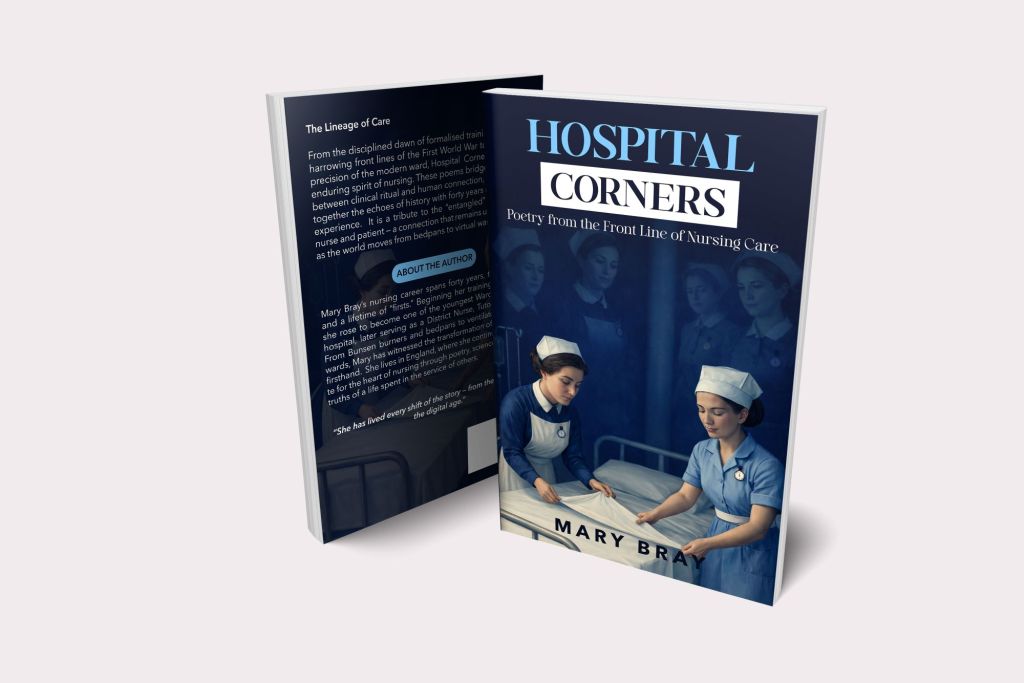
Mara: Sam’s been building towards this for a while. The episode centres on the launch of a new series — Hospital Corners — and what it means to hold forty years of nursing experience and turn it into something that can be heard as well as read.
Pip: Let’s start with the series itself, and why it exists.
Introducing The Hospital Corners Series
Mara: The framing question here is deceptively simple: what is nursing, really, once you strip away the iconography? Not Nightingale’s starch apron, not the sentimental shorthand — what actually holds the profession together across more than a century of change?
Pip: The introduction sets the ground clearly. After forty years in the profession, the answer offered is this: “Compassion. Presence. Dignity. These threads endure.”
Mara: And the series is built around that constancy. Hospital Corners isn’t a linear history or a memoir — it’s described as a mosaic, fragments of lived experience alongside historical accounts and stories passed between colleagues. The form matches the argument: nursing knowledge is cumulative, relational, carried person to person.
Pip: The title itself does a lot of work. Hospital corners — the method of folding a sheet tightly at the bed’s edge — is presented as the discipline and the care collapsed into a single gesture. The art of smoothing away discomfort for the person who will lie in that bed.
Mara: What gives the introduction its sharpest edge is the poem embedded in it, titled Profession. It addresses the gap between how nursing is perceived and what it actually demands. The line that lands hardest: “Still, they called it a gift, as if we had not earned it. Still, they praised our hearts and forgot our minds.”
Pip: That’s the tension the whole series is organising itself around — the profession recognised for its feeling and quietly robbed of its rigour.
Mara: The poem makes it explicit: every shift was a thesis, every wound a question, every patient a curriculum. The series promises to hold that intellectual and emotional weight together rather than choosing between them.
Pip: Two titles are already signalled as coming next — Metamorphosis and Starched Apron — which suggests the historical arc is going to run alongside the personal one from the start.
Mara: The invitation at the close of the introduction is worth noting: whether you’ve worn the uniform, loved someone who has, or simply wondered what lies behind the curtain of the ward, this series is reaching for a broad audience without diluting what it’s actually about.
Mara: What stays with me is the mosaic idea — not a single authoritative account, but fragments held together by a shared voice.
Pip: The next episode should tell us whether the historical and the personal can genuinely carry each other. I suspect they can.

 Converging Lives. Sounds, Silence and Imagery